
DEEPWATER HORIZON RECOVERY
CASE STUDY
Challenge
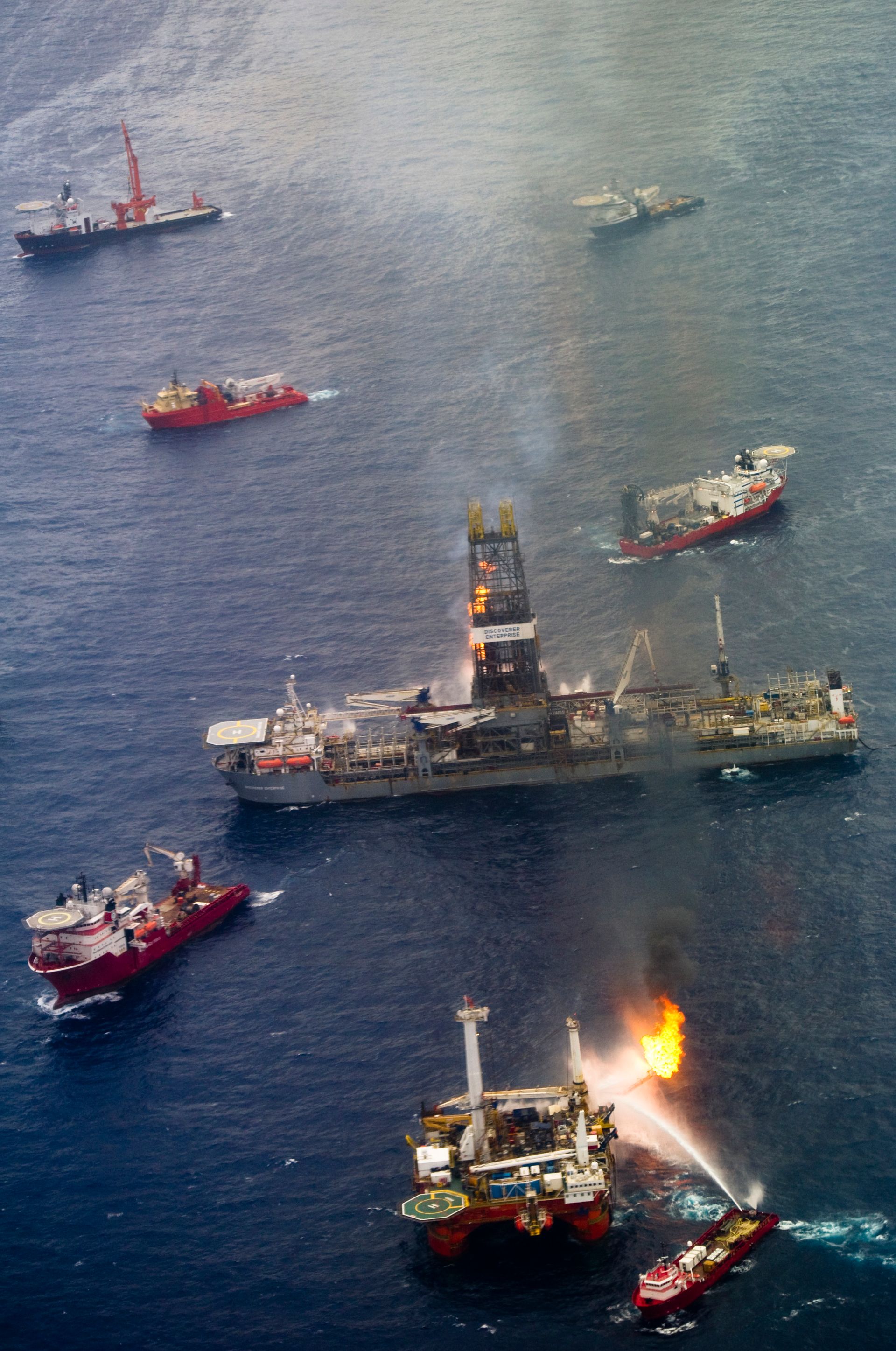
The ultra-deepwater oil rig Deepwater Horizon exploded April 20, 2010, killing 11 workers and ultimately spewing an estimated 210 million gallons of oil into the Gulf of Mexico. With an economy built on fishing and tourism, as well as oil and gas extraction, the damage to the region was immediate and lasting. Focusing initially on stopping the leak and cleaning up, President Obama asked his Navy Secretary, former Mississippi Gov. Ray Mabus and the most senior Administration leader from a Gulf State, to develop a long-term recovery plan for the economy and health of the region. As chief of staff to Secretary Mabus and at his direction, Thomas Oppel supervised the approach, development and initial implementation of that plan.
Approach
While some elements of recovery plan, such as the need for federal financial support, were immediately obvious, Mabus and Oppel decided broad public support for any plan could only come through soliciting direct and personal input from every state and sector. Oppel created and supervised two teams composed of Navy Department political appointees. One team was charged with developing policy recommendations and coordinating an inter-agency process with federal agencies: Health and Human Services, the Environmental Protection Agency, Treasury and others. The second team scheduled and staffed over 100 public and private meetings across the Gulf Coast, including with all five Gulf State governors, myriad state agencies and non-governmental organizations (NGOs) and dozens of town halls with the general public. Just three months after President Obama announced this recovery planning effort, information gathered from these two efforts resulted in the report America’s Gulf Coast, A Long-Term Recovery Plan after the Deepwater Horizon Oil Spill, which was submitted to the President.
Outcome
The 126-page report encompassed five topic areas deemed critical to the long-term recovery of the Gulf region. However, two key recommendations were to take the unprecedented step of dedicating a significant portion of the civil penalties authorized in the 1972 Clean Water Act directly to the Gulf Coast and to create a Gulf Coast council — including elected officials, NGOs and citizens — to decide on the appropriate distribution of funds. Both recommendations were included in the bipartisan RESTORE ACT, which President Obama signed into law in July. The Gulf Coast Ecosystem Restoration Council established by that law continues to operate today, adjudicating funding projects through Gulf Coast Restoration Trust Fund, which received 80 percent of the $1 billion in civil penalties assessed from the Deepwater Horizon spill. Additional appropriations over the years have enabled the Trust Fund to obligate more than $1.6 billion, including nearly $500 million in direct funding to the five Gulf Coast states.